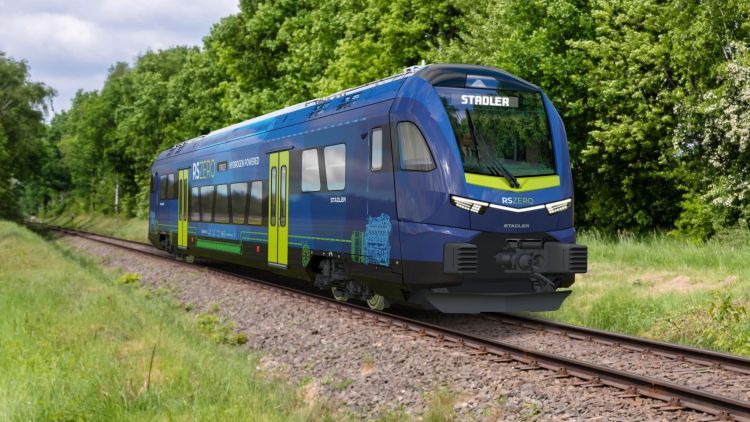
Stadler has introduced the RS ZERO, the latest addition to its range of regional trains, during a presentation in Berlin. This new model succeeds the Regio-Shuttle RS1, a vehicle that has been a staple in German and Czech regional rail transport for nearly three decades.
The RS ZERO continues the legacy of the RS1 by maintaining some of its well-known design elements, such as the trapezoidal window strips, while incorporating modern features like a LED wing for a more futuristic look. With over 38 percent of German and 43 percent of European railway lines not being electrified, the RS ZERO provides a practical solution for reducing carbon emissions across a broader range of routes.
This model is constructed to be lightweight, with an axle load of less than 18 tonnes, making it suitable for secondary routes with lower traffic density. The RS ZERO is offered in both single and double-unit configurations, accommodating between 70 and 150 passengers.
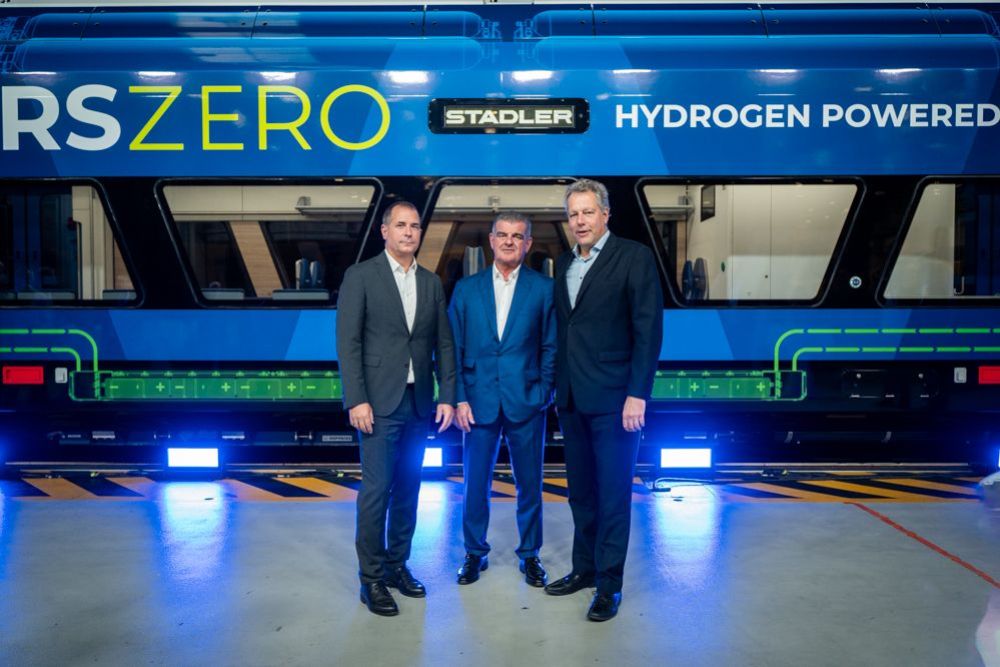
The prototype showcased in Berlin is a one-car vehicle powered by hydrogen, featuring a versatile interior with areas for bicycles, pushchairs, and bulky luggage, alongside standard seating options. Sustainable materials have been used extensively in the construction of the interior, from flooring made of renewable raw materials to recycled PET bottle side panels. The air conditioning system utilizes a climate-friendly refrigerant, underscoring the vehicle’s environmentally conscious design.
With RS ZERO revealed even before the Innotrans fair in Berlin, the biggest railway fair might bring the news of the first orders of these units.